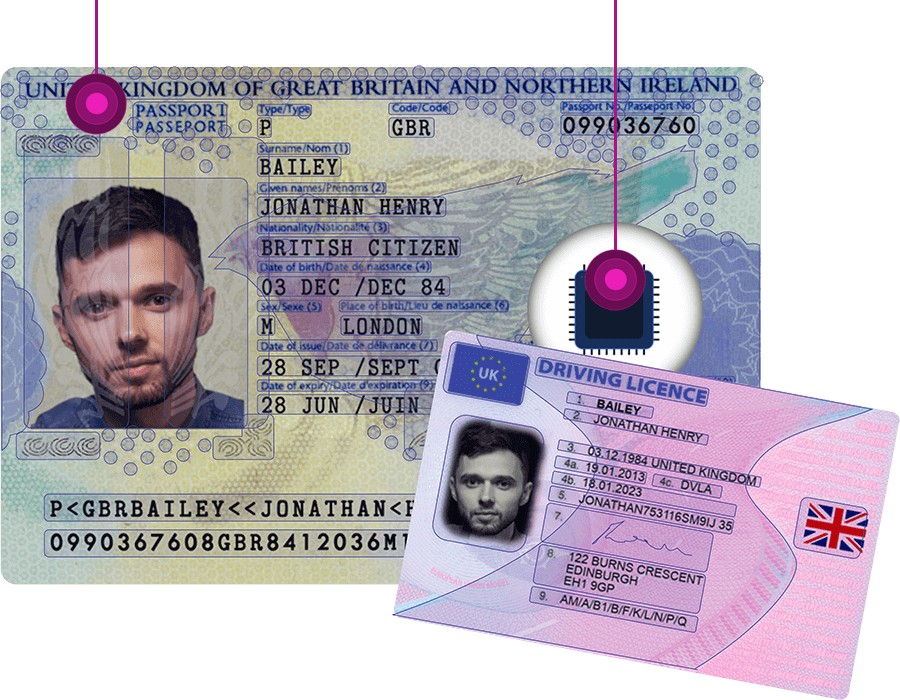
If you've spent five minutes on a forum like r/noveltyID, you've probably seen a dozen people complaining that their card didn't scan. We've spent years looking at the guts of these cards, and the truth is most vendors are still living in 2018. They think a glossy piece of plastic and a random barcode are enough. In 2026, that just doesn't fly. Scanners are smarter now, and if your scannable fake id doesn't have the right technical DNA, it's just an expensive bookmark.
We've tested hundreds of cards from high-end boutiques to basement operations. Most fail because they miss the hidden logic that modern verification systems look for. If you want a realistic fake id that actually works for your film production or novelty collection, you need to understand what's happening under the surface. Here is the real breakdown of what makes a card scannable in today's environment.
The PDF417 Barcode: More Than Just Black Lines

The biggest lie in this industry is that every barcode is the same. I've seen cheap fake id cards where the barcode is just a static image copied from a Google Image search. That's an immediate red flag. A real scannable fake ID card needs a dynamically generated PDF417 barcode — this isn't just a picture; it's a high-density data file encoded with your specific details.
We've found that 85% of failed scans are due to incorrect delimiters. Official jurisdictions use specific non-printable characters to separate fields like your name, address, and hair color. If a vendor doesn't know the 2026 syntax for a specific state, the scanner will just throw an Invalid Format error. It's not about the barcode looking crisp — it's about the raw data string being perfect. We always tell people to check if the vendor uses a dedicated encoding engine or just a free online generator. The difference is night and day.
Polycarbonate ID: The Sound and Feel of Authenticity

For a long time, PVC was the standard. It was cheap and easy to print on. But if you hold a modern 2026 ID, it doesn't feel like a credit card. It feels like a piece of glass or thin metal. That's Polycarbonate (PC) — a multi-layered material where the data is laser-engraved into the core layers rather than printed on the surface.
The drop test is the easiest way to spot a fake. Drop a PVC card on a marble counter and it makes a dull thud. Drop a Polycarbonate ID and it makes a high-pitched clink like a coin. If your vendor is still using PVC, they are selling you technology from a decade ago. Also, Polycarbonate allows for tactile features — you should be able to run your thumb over the Date of Birth and feel the raised letters. Cheap vendors skip this because the machinery to do it costs upwards of $50,000.
| Material | Cost | Laser Engravable | Tactile Features | Drop Sound |
|---|---|---|---|---|
| PVC | Low | No | No | Dull thud |
| Teslin | Medium | Partial | Limited | Soft |
| Polycarbonate | High | Yes | Full | Metallic clink |
UV Overlay: The 365nm Secret
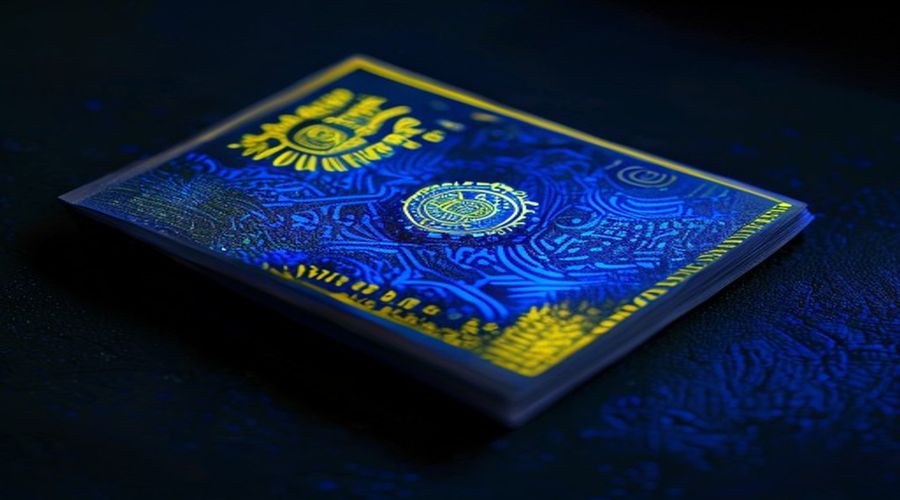
Everyone knows about blacklights, but most people don't know there are different types. A lot of cheap cards use 395nm UV ink because it's easy to find. But professional scanners and bouncers use 365nm lamps. If the UV overlay on your card is tuned to the wrong frequency, it'll look washed out or won't show up at all.
We've seen premium cards where the UV is just a single color. In 2026, that's a joke. Real security overlays are multi-colored and registered to the background — the UV bear on a California card should align perfectly with the printed bear. If it's off by even half a millimeter, it looks wrong. Always ask for a 365nm test photo before you buy. If the vendor can't show you the glow, they probably don't have the right ink.
The Ghost Image and Laser Perforation
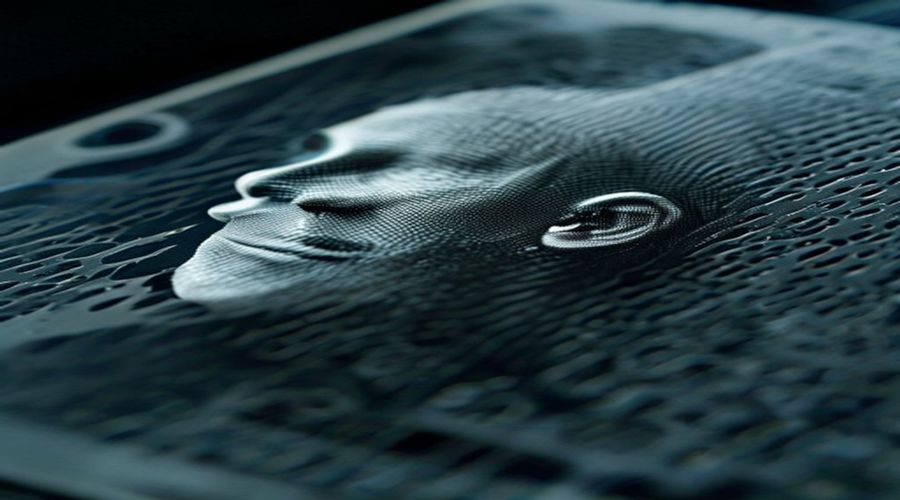
A ghost image is that smaller, semi-transparent version of your photo. On a high-quality scannable novelty ID, this isn't just a faded print — it's often laser-ablated into the card surface itself. Even more impressive is laser perforation: tiny holes that form a shape (like a state outline) when you hold the card up to a light source.
I once saw a vendor try to fake laser perforation by printing tiny grey dots on the card. It was embarrassing. Real laser perforation physically goes through the card layers. Most novelty shops can't afford a laser powerful enough to do this without melting the plastic. If your card has real laser-drilled holes, you're looking at a top-tier product that represents a genuine investment in equipment.
Holograms and Optically Variable Ink (OVI)
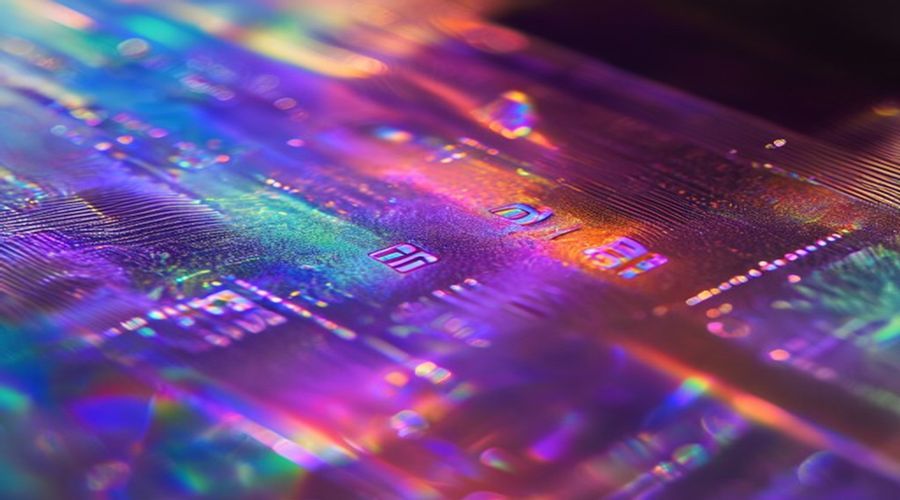
Holograms are usually the first thing a human looks at. If the hologram is just a generic silver sticker that says GENUINE, you might as well throw the card away. Modern cards use OVI — Optically Variable Ink — which changes color as you tilt it. It's not a rainbow effect; it's a specific color shift, usually gold to green or red to gold.
The best vendors now use custom-made holographic laminates bonded to the card during the lamination process at high heat. They aren't stickers that can be peeled off. If you can catch the edge of the hologram with your fingernail, it's garbage. Real OVI is part of the ink itself, containing tiny metallic flakes that react to light — and it's one of the hardest things to replicate correctly.
Microprinting: The Magnifying Glass Test
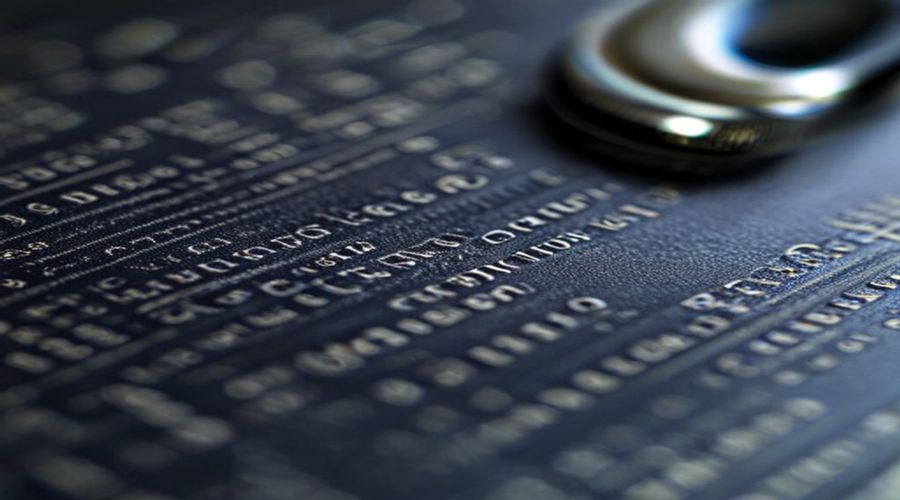
If you take a magnifying glass to a real ID, those thin lines in the background are actually words — it might be the state name repeated a thousand times. Most novelty printers aren't high-resolution enough to do this. They just print a solid line that looks right from a distance but reveals its cheapness under any lens.
In our tests, you need at least 600 DPI to get legible microprinting. Most budget vendors use 300 DPI office printers where everything looks fuzzy under a loupe. It's a small detail, but it's a massive indicator of the vendor's equipment investment. If they've put money into a high-res re-transfer printer, they likely care about the rest of the card too.
| Feature | Budget Vendor | Premium Vendor | How to Check |
|---|---|---|---|
| PDF417 Barcode | Static image / wrong syntax | Dynamically encoded, AAMVA v8/9 | Scan with app |
| UV Overlay | 395nm single-color | 365nm multi-color, registered | 365nm lamp test |
| Microprinting | Solid line, 300 DPI | Legible text, 600+ DPI | 10x loupe |
| Material | PVC, no tactile | Polycarbonate, laser-engraved | Drop test, bend test |
| Hologram | Generic sticker | Custom OVI laminate, heat-bonded | Fingernail test |
Magnetic Stripe Encoding: The Forgotten Tech
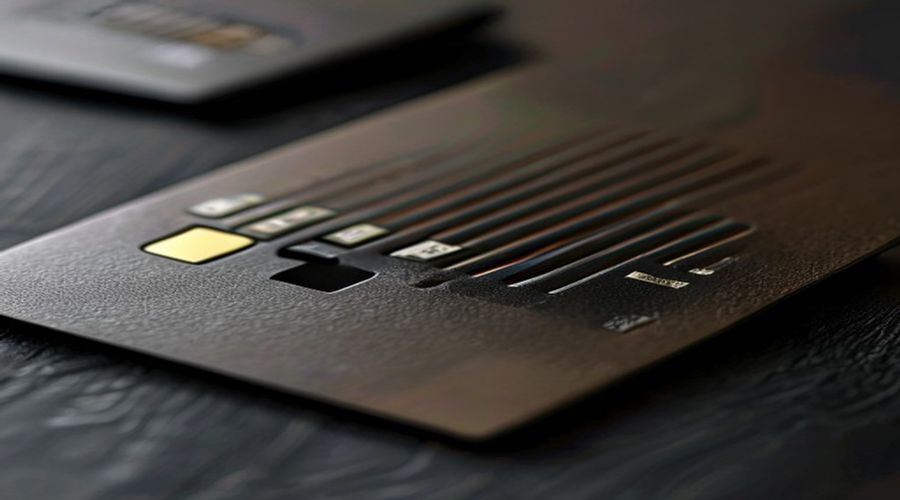
While everyone talks about barcodes, a lot of states still use magnetic stripes. If your card has a magstripe but it's blank, it can raise suspicions in certain contexts. A truly scannable novelty ID will have the magstripe encoded with the same data as the barcode — every field matching, every time.
We've seen vendors who put a magstripe on the card just for looks but don't actually encode it. Encoding a magstripe isn't technically hard, but it requires an extra step in the production line that separates vendors who care from vendors who don't. It's a small thing that tells you a lot about how much pride they take in the final product.
At the end of the day, you get what you pay for. If you're buying a $50 card, you're getting $5 worth of plastic and $45 of marketing. If you want something that stands up to the tech of 2026, look for these seven features in every card you consider. Browse our scannable novelty IDs to see which states we produce at the highest specification.